— At Our Table —
Phytonutrients Part Three: Cracking the Health Benefits of Pasture-Raised Eggs
The yolk is the story — and most "pasture-raised" eggs on the shelf aren't actually pasture-raised.

The yolk is the story — and most "pasture-raised" eggs on the shelf aren't actually pasture-raised.
A pasture-raised egg from a hen on real pasture is a self-contained nutrient powerhouse — significantly higher in choline, vitamins A/D/E/K, omega-3 fatty acids, and the eye-protective carotenoids lutein and zeaxanthin than a commercial egg from a confinement operation. The yolk carries most of this. The catch: most “pasture-raised” eggs on the supermarket shelf are mislabeled — the hens technically have access to the outdoors but rarely go outside. Real pasture-raised hens live in portable houses that move across pasture frequently. Here’s what’s in a real one.
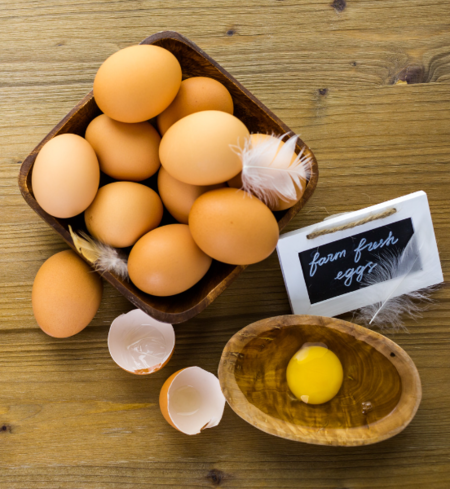
An egg produced by a laying hen raised on pasture is a self-contained nutrient powerhouse. It is hard for any single food to match the nutrient density in a pasture-raised egg. We all know that egg whites are loaded with protein and essential amino acids, but are you aware of the incredible nutritional value of egg yolks?
Have significantly higher levels of folate and vitamin B12.
Have far more choline than commercially produced eggs.
Egg yolks from pasture-raised hens are rich in vitamins A, D, E, and K. Much of this richness is not found in egg whites. Compared to commercial eggs, pasture-raised eggs have:
Pasture-raised egg yolks have 2–3 times more omega-3 fatty acids and a far better omega-6 to omega-3 ratio than commercial eggs.
Pasture-raised egg yolks also contain significant amounts of lutein and zeaxanthin.
Pasture-raised yolks are also rich in the minerals calcium and copper.
The key to finding true pasture-raised eggs is to buy from a local, trusted source. When purchasing eggs from a supermarket grocery store, you need to be aware that labels can be deceptive. The USDA-approved labels for “Pasture-Raised,” “Free-Range,” and “Cage Free” can be deceiving. Most of the time this simply means the chickens have access to the outdoors, but rarely actually go outdoors. Most are in static houses that are not movable.
True pasture-raised chickens live in portable houses that are moved frequently. This is important because most of the nutrients the chickens need to produce healthy eggs comes from the plants they forage on and the insects and worms they eat. Only chickens that are moved frequently, on pasture, have this ability. In short, cracking the nutritional potential of pasture-raised eggs comes down to knowing what your food ate, and then making your purchasing decisions accordingly.
Yes — and the differences are measurable. Pasture-raised eggs typically have 2–3× more vitamin A, 3× more vitamin E, 2–3× more omega-3 fatty acids, and significantly more vitamin D and K than commercial eggs. They also carry meaningfully more choline, lutein, and zeaxanthin. The differences trace directly to what the hens ate.
Current research does not support the older view that dietary cholesterol from egg yolks meaningfully raises heart-disease risk for most people. A study published in the American Journal of Clinical Nutrition found no association between egg consumption and coronary artery disease, even in carriers of the ApoE4 gene (which raises baseline heart-disease risk). Egg yolks have actually been shown to raise HDL (“good”) cholesterol, which helps clear arterial plaque.
Choline is a B vitamin essential for brain development, memory, muscle control, and cell-membrane integrity. About 90% of the U.S. population, and as many as 95% of pregnant women, are deficient in it. Our bodies can only synthesize small amounts on our own — most has to come from diet. A pasture-raised egg yolk contains about 215 mg of choline in one of its most bioavailable forms.
Both are carotenoids — plant pigments — that protect the retina from oxidative damage and blue-light exposure. They’re concentrated in pasture-raised egg yolks because the hens eat plants and insects that contain them; commercial eggs from confinement operations have much less. Together they support central vision and protect against age-related macular degeneration.
Cage-free means the hens aren’t in cages but are still typically housed indoors in crowded barns. Free-range means they have access to the outdoors — which most rarely use. USDA “pasture-raised” requires the same access criterion. True pasture-raised — what we do — means hens live in portable houses that move across actual pasture, with hens foraging on plants and insects daily. The label alone doesn’t tell you which is which. Ask the farm.
Dr. Allen R. Williams, Ph.D.

 What Are Phytonutrients — And Why Food Quality ...
 Why Our Grass-Fed Beef — And What It Does for Y...
 Inside Etta Hills: The Flavors of a Regenerativ...
