— At Our Table —
Why Our Grass-Fed Beef — And What It Does for You and the Land
No hormones. No antibiotics. Animals that live the way they evolved to — and soil that's better for it.

No hormones. No antibiotics. Animals that live the way they evolved to — and soil that's better for it.
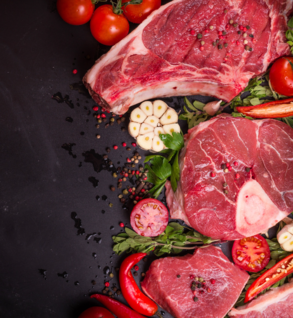
Grass-fed beef raised on a regenerative Mississippi farm is meaningfully different from supermarket beef — leaner, higher in omega-3 fatty acids and CLA, raised without hormones or antibiotics, and produced through farming practices that build soil instead of mining it. The animals graze diverse pasture from start to finish; we don’t grain-finish at the end. Buying from us means food that traces directly back to the land it came from — and a farm whose practices you can come walk for yourself.
Our grass-fed beef comes from cattle that roam diverse pastures and graze the way ruminants evolved to graze — moving across forage in adaptive paddocks, eating what’s in front of them, never finishing on grain in a feedlot. They’re raised without hormones, without sub-therapeutic antibiotics, and without confinement.
The practices behind that aren’t a label. They’re a system. Regenerative grazing means moving animals on a schedule that gives the pasture time to recover and deepen its root systems. That builds soil organic matter, sequesters carbon, supports pollinators and beneficial insects, and produces forage that’s measurably more nutrient-dense than monoculture grain.
The cattle eat that forage. We finish them on it. The beef that comes off the farm is the soil it came from, two steps removed.
Choosing where your beef comes from is also choosing what happens to the land it came from. Regenerative farming builds soil, restores biodiversity, and keeps carbon in the ground instead of releasing it into the atmosphere. It supports a working family farm in Etta, Mississippi — not an extractive industrial system.
When you buy a quarter beef from us, you’re voting for the practice category every time. That matters more, dollar for dollar, than almost any other food choice you can make.
Chris Williams · Etta Hills Farm

 What Are Phytonutrients — And Why Food Quality ...
 Inside Etta Hills: The Flavors of a Regenerativ...
