— At Our Table —
What Are Phytonutrients — And Why Food Quality Depends on Them
The compounds that make food nutritious aren't on the label. They're in the soil — or they aren't.

The compounds that make food nutritious aren't on the label. They're in the soil — or they aren't.
Phytonutrients are bioactive compounds plants produce to defend themselves and signal to their environment — and when we eat plants, or animals that ate plants, those compounds work for us too. They give produce its color, its flavor, and most of its health-protective effects. They aren’t classified as essential nutrients the way vitamins and minerals are, but the research on what they do — antioxidant, anti-inflammatory, gut-supporting, cancer-protective — is overwhelming. The catch: industrial farming has stripped most of them out of the modern food supply. The food on the supermarket shelf is calorically rich and phytonutrient-poor. Regenerative agriculture reverses that.
In a food system that’s increasingly built around convenience, the quality of what we eat has never mattered more — and the most overlooked piece of food quality is phytonutrients.
Also called phytochemicals, phytonutrients are bioactive compounds found in plants. They’re what give fruits, vegetables, grains, herbs, and pasture-raised animal products their colors, their flavors, and a meaningful share of their protective effects. Hundreds have been identified; thousands probably exist. Unlike vitamins and minerals, they aren’t classified as “essential” — meaning your body won’t get a named deficiency disease without them — but they’re essential in the practical sense. The diets most associated with long, healthy lives are the diets dense in them.
Phytonutrients don’t just protect the plants that produce them from pests and UV. They protect us when we eat them.
We believe healthy soil grows healthy food, and healthy food grows healthy people. That isn’t a slogan. It’s the mechanism we run the farm by.
Three practices, in order, do the work:
Cover crops, rotational grazing, and minimal-till farming build soil organic matter, microbial diversity, and root depth. That’s what allows plants to access the trace minerals and produce the secondary compounds that end up as phytonutrients.
A pasture with twenty species of grasses, legumes, and forbs is fundamentally different from a feedlot ration of corn and soy. Diversity in the pasture means diversity on the fork.
Ruminants moved across diverse, adaptively grazed pasture concentrate phytonutrients into their fat, muscle, and (in laying hens) their yolks. The animal becomes the carrier for the soil’s nutrient density.
The result is food that tastes better, nourishes more deeply, and sustains the land it came from — instead of mining it out.
Phytonutrients (also called phytochemicals) are bioactive compounds plants produce to defend themselves and respond to their environment. Hundreds have been identified. The most-studied groups are polyphenols, carotenoids, flavonoids, and glucosinolates. They’re responsible for the color, flavor, and many of the protective effects of fruits, vegetables, herbs — and of meat and eggs from animals raised on diverse pasture.
Not by the strict scientific definition — your body won’t develop a named deficiency disease without them, the way it does without vitamin C or iron. But the research on what phytonutrients do (antioxidant, anti-inflammatory, prebiotic, neuroprotective) is overwhelming, and the diets most associated with long, healthy lives are the diets dense in them. Essential by outcome, even if not essential by definition.
Multiple peer-reviewed studies have documented declining mineral and phytonutrient content in conventionally grown crops over the last fifty years — sometimes 20% to 50% lower than the same crops in the 1950s. The drivers are well-understood: soil depletion from monoculture cropping, heavy tillage, synthetic fertilizers, and breeding programs optimized for yield and shelf life rather than nutrient density.
Yes — when the animal ate plants that contained them. Pasture-raised, grass-finished beef carries significantly higher levels of carotenoids, polyphenols, omega-3 fatty acids, vitamin E, and conjugated linoleic acid than conventionally raised, grain-finished beef. The same is true for pasture-raised pork, poultry, and eggs. The animal is a carrier; what it ate determines what it carries.
Color is the first signal — deep, vivid color in produce, yolks, and grass-finished meat usually indicates a higher phytonutrient load. Beyond color: ask your producer how the animals were raised, what they were fed, and whether you can visit the farm. A label is not a substitute for a practice you can verify.
Chris Williams · Etta Hills Farm
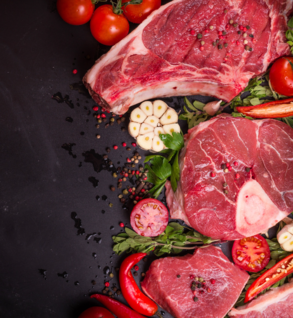

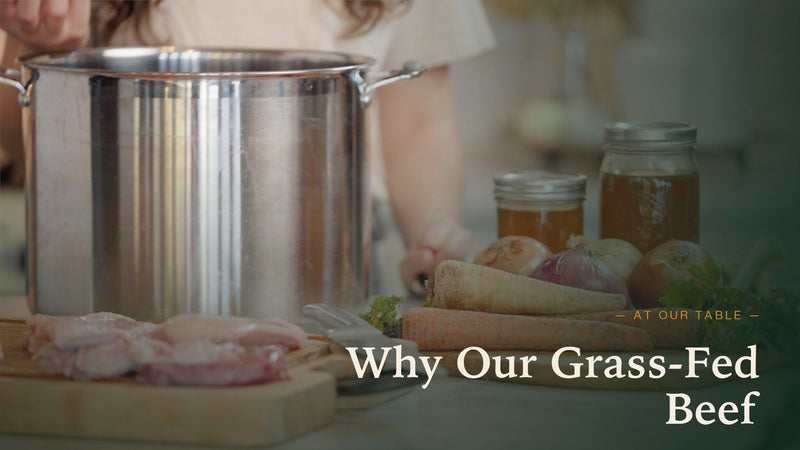 Why Our Grass-Fed Beef — And What It Does for Y...
 Inside Etta Hills: The Flavors of a Regenerativ...
