— At Our Table —

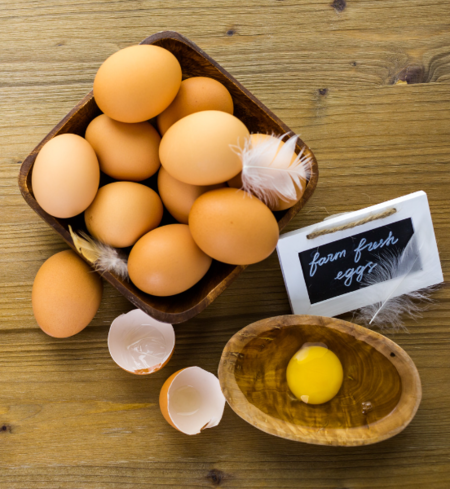
The Nutritional Powerhouse of Pasture-Raised Egg Yolks

The white gets the credit for protein. The yolk is where the nutrient density really lives.

In this post
    Did you know

    The choline gap

    About 90% of Americans — and as many as 95% of pregnant women — are deficient in choline.

    Choline is essential for brain development, memory, muscle control, and cell-membrane health. Your body can only make a small amount on its own; the rest has to come from food.

    A single pasture-raised egg yolk contains about 215 mg of choline — in one of its most bioavailable forms. It's the simplest, cheapest way to close the gap.

    Eggs, especially those from hens raised on pasture, stand out as one of the most nutrient-dense foods available. While the protein and essential amino acids in egg whites are well-known, the incredible nutritional value packed in egg yolks often goes unnoticed.

    What pasture-raised yolks actually deliver

    • Vitamins A, D, E, and K are abundantly found in egg yolks from pasture-raised eggs, offering 2 to 3 times more Vitamin A and E and significantly higher levels of Vitamin D and K compared to their commercial counterparts.
    • Enhanced folate and Vitamin B12 levels. Pasture-raised eggs boast significantly higher levels of folate and Vitamin B12.
    • Choline richness. Essential for brain development, muscle control, memory, and cell membrane health, choline also exhibits strong anti-inflammatory properties. Alarmingly, up to 95% of the U.S. population, including pregnant women, are deficient in choline. One egg yolk contains about 215 mg of choline, highlighting its importance in our diet.
    • Optimal omega fatty acids. With 2 to 3 times more omega-3 fatty acids and a better Omega-6 to Omega-3 ratio, pasture-raised egg yolks support a healthier lipid profile.
    • Lutein and zeaxanthin. These carotenoids are vital for eye health, protecting central vision and aiding in blue light absorption.
    • Minerals. Egg yolks from pasture-raised chickens are a good source of essential minerals like calcium and copper.

    Scientific backing

    Studies, such as those published in the American Journal of Clinical Nutrition, have shown that consumption of eggs and egg yolks does not increase the risk of coronary artery disease, even in genetically predisposed individuals. Instead, dietary cholesterol from eggs can improve HDL cholesterol levels, which aids in arterial health.

    Locating healthy eggs

    To ensure you’re getting true pasture-raised eggs, source them from a local, reputable farmer. Beware of misleading supermarket labels like “Pasture-Raised,” “Free-Range,” and “Cage Free.” True pasture-raised chickens live in portable houses moved frequently to allow them access to fresh forage, insects, and worms — key contributors to the nutrient and phytonutrient density of their eggs.

    For those seeking the unparalleled nutritional benefits of pasture-raised eggs, understanding the importance of sourcing and the role of diet in egg quality is essential.

    How to buy

    By choosing eggs from Etta Hills Farm or other trusted local sources, you’re not only nourishing your body with superior nutrients but also supporting regenerative farming practices.

    It is hard for any single food to match the nutrient density in a pasture-raised egg.

    Dr. Allen R. Williams

    The bottom line

    • The yolk is the nutrition. Whites are protein; yolks are vitamins, minerals, choline, carotenoids, and omega-3s.
    • 2–3× more vitamin A and E, significantly higher D and K, 2–3× more omega-3s, and a better omega-6:omega-3 ratio than commercial eggs.
    • Lutein and zeaxanthin protect central vision and absorb blue light. The yolk color is literally these compounds.
    • Labels are unreliable. "Pasture-raised," "free-range," and "cage-free" mostly mean access to outdoors. The real test is whether the hens live in portable houses on actual pasture.
    Allen R. Williams, Ph.D.
    About the author

    Co-founder

    Allen R. Williams, Ph.D.

    Sixth-generation farmer and Ph.D. animal scientist
    Allen R. Williams, Ph.D.

    Co-founder

    Allen R. Williams, Ph.D.

    A sixth-generation farmer and Ph.D. animal scientist, Allen spent fifteen years on faculty at Louisiana Tech and Mississippi State before going full-time into regenerative work in 2000. He's since consulted with more than 4,000 farmers and ranchers across the Americas, co-founded Libertas Land, Understanding Ag, the Soil Health Academy, Regenified, and Grass Fed Insights, and pioneered the 6-3-4™ framework now taught around the world. You've seen him inKiss the Ground,Common Ground,Roots So Deep,Sacred Cow, on TEDxBoston and the Dr. Oz Show. At Etta Hills, he's healing the same Mississippi red clay he grew up on.